[ad_1]
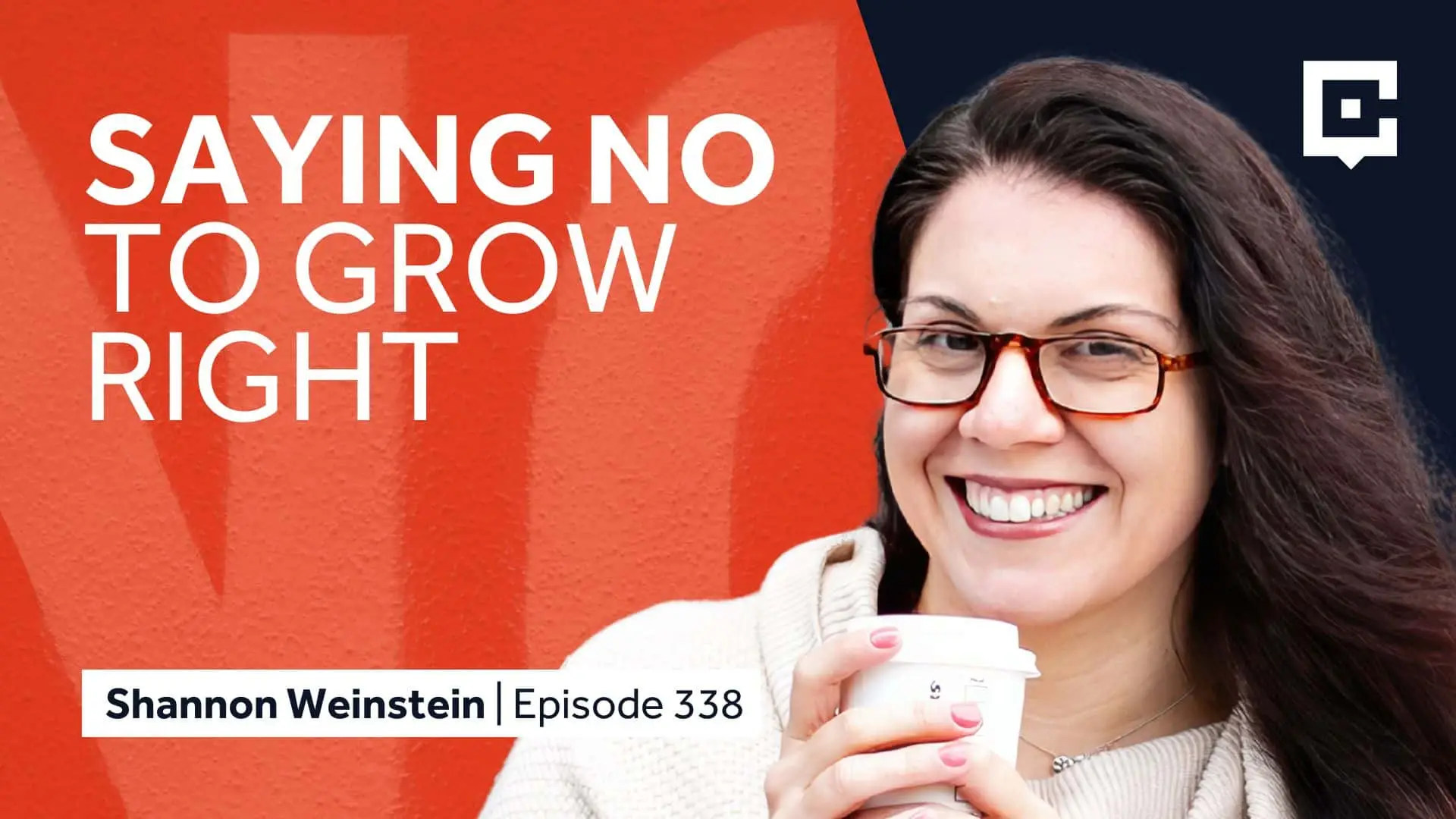
How does a Big Four accountant and part-time Zumba instructor transform into the President and CEO of her own fractional CFO services organization? In this episode, Shannon Weinstein takes us through her unique career journey—from balancing corporate accounting by day and teaching fitness classes by night to launching her own consulting firm. Shannon shares the pivotal moments that led her to realize the financial struggles many small business owners face and how she turned her passion for teaching into a thriving business, helping entrepreneurs master their finances.
In this episode, you will learn:
- The importance of separating personal and business finances early on
- How cash flow management can make or break your business—even if you’re profitable
- Practical tips for overcoming financial fears and taking control of your business’s future
- Why building a solid financial foundation from the start is key to long-term success
Welcome to the Consulting Success podcast. I’m your host Michael Zipursky, and in this podcast, we’re going to dive deep into the world of elite consultants where you’re going to learn the strategies, tactics and mindset to grow a highly profitable and successful consulting business.
Before we dive into today’s episode. Are you ready to grow and take your consulting business to the next level? Many of the clients that we work with started as podcast listeners just like you, and a consistent theme they have shared with us is that they wished they had reached out sooner about our Clarity Coaching Program rather than waiting for that perfect time. If you’re interested in learning more about how we help consultants just like you, we’re offering a free, no pressure growth session call. On this call, we’re going to dive deep into your goals, challenges and situation and outline a plan that is tailor made just for you. We will also help you identify where you may be making costly and time consuming mistakes to ensure you’re benefiting from the proven methods and strategies to grow your consulting business.
So don’t wait years to find clarity. If you’re committed and serious about reaching a new level of success in your consulting business, go ahead and schedule your free growth session. Get in touch today. Just visit Consulting Success – Grow to book your free call today.
Shannon Weinstein, CPA and President/CEO of Keep What You Earn Co., is a fractional CFO dedicated to empowering small business owners by making financial concepts simple and relatable. Starting her career early, she managed a McDonald’s at 16 and later spent 15 years in Big 4 and corporate finance. Through her top 1% podcast, Keep What You Earn, Shannon combines real-life examples with financial expertise to help entrepreneurs understand their numbers and use them to scale their businesses. She’s also a much sought-after speaker and advocate for financial literacy.
Connect with Shannon Weinstein
Discover more about Keep What You Earn
Navigating Finances: A GPS for Your Business
Hey, Shannon. Welcome.
Hey, thanks for having me.
Yeah. Excited for our conversation. So you live and breathe in the world of finances and do a lot of work with smaller businesses in this area and business owners. I thought we could just start off talking a little bit about the concept of a financial kind of navigation system. And what does that mean to you? What might that mean to, or should it mean to others?
For me, the financial navigation system is the essential tool to get you to your destination faster, which is just like any GPS. So I’ve always likened what we do to business owners driving a vehicle, and what they often do is they will hand the keys to a financial professional, have them take the driver’s seat, and they will shove themselves in the trunk, and they will typically not like where they end up. So what we always say is, we’re designed to be that person in the front seat telling you when the potholes are coming and telling you what turn to take, as opposed to taking the keys from you, running it for you, or just kind of showing up every rest stop, every year long tax cycle. So we want to be that person that’s like in the front seat with you being able to advise you the whole way through. And that’s how I always compare getting to your destination, getting to your goals a lot faster with that person able to help you navigate.
Common Financial Mistakes: Avoidance and Neglect
Yeah. I find finance is one of these areas that some people just really understand it and they stay on top of it. They’ve maybe kind of had that inside of them from a young age, or maybe they learned it at a certain kind of time in their life. But then you have people who are, like the polar opposite, who just, they don’t pay attention to finances at all. It’s the last thing they think about. Even when it comes to invoicing clients, it’s like, “Yeah, I’ll get to it when I can get to it.” It’s like, “Well, maybe you should be thinking a little bit more about that because that’s the lifeblood of your business.” But I’m wondering, because you work with so many people in this area, specifically with their finances, what are the most common areas where people are not even paying attention to or just mistakes that people are making? I’m hoping that there might be some for those that are joining us right now. They go like, “Oh, yeah, I’m not even doing that.” Or maybe, “I should be looking at that,” or “It’s been a while.” So what kind of comes up that you might point to?
I think you nailed it with the avoidance. I think that’s a big part of it. And it starts with this assumption that, let’s say it’s a letter from the IRS or it’s just something that kind of faces you, an email, anything, and you just avoid it because you just don’t want to deal with the emotions that’s going to cause you. But what ends up happening is that thing is like the monster under the bed we have as kids because we think it’s a monster because we hear a noise. We won’t look at it though, but we assume it’s a monster. So it is in our head. When we finally look at it, we realize it was a mouse. And then you go, “Wow, I feel silly.” And that’s what a lot of business owners go through is they realize that once they open the letter, they realize, “Oh, we’ve updated your address.” Okay, cool. And then they go, “Wow, I just wasted a ton of emotions around this when it was a 10-second, 5-minute resolution or it was a quick email to my accountant to resolve this.” I think people make a bigger deal out of these types of things than they need to, and rightfully so, because this stuff is scary, it’s unfamiliar and it’s uncertain because we never learned about this.
And I think once I broke this down for my business owners and said, “Hey, listen. The folks that are working at the IRS, they’re regular old joes, typically in the Midwest. And like the same type of people who work at the DMV. You can call them up, you can ask them questions, they’re normal people.” And they just think of this intimidating, villainous entity. And I’m like, “It’s actually really not that bad.” Once you work with them and you kind of understand how they operate, it demystifies the scary into something that’s like, “Oh, that’s actually really not that stressful. I don’t know why I was making a big deal out of this.” So that’s a typical transformation I see. But in a very tangible way, I would say most people will put off and delay taking care of the financial things. It’s always that excuse of, “Well, when I make money, I’ll worry about this,” or “When I’ve made enough money, I’ll go ahead and set this all up.” But it’s like putting furniture into your house when you’re not done renovating. It’s going to take a lot more effort to build this after stuff is already there and after you’ve already started generating revenue. You could have missed out on opportunities, or you could have missed out on different things that you should be doing to set yourself up for better success. So I always say lay the foundation first.
Key Financial Focus Areas: Separation, Cash Flow, and Laying the Foundation
So let’s kind of go into that in a bit more detail. What specifically are the areas that you see people are maybe not paying attention to that they should be, or just that they’re making complete errors? You kind of paint a very broad, high level of, “Pay attention to your finances. It’s important. Don’t leave it. Don’t neglect it.” But inside of that, is it related to cash flow? Is it taxes? And I’m sure it could be all of these things, but what are maybe a few, call it two or three, that really stand out in your mind.
Yeah. And first of all, if anyone relates to these and says, “Wow, I’m doing that,” there’s absolutely no shame in this. It’s not that you’re making a massive mistake, but this is an opportunity to redirect and make that turn so that you’re heading in the right direction so when bigger things happen, you’re ready for them. And I say, number one, is separating personal and business finances. That’s one of the more basic things you can do that will really make a big difference down the line. If you keep things not commingled, you keep them separated, and you can clearly delineate this is business money, this is personal money. It’s not just for tax reasons or to make your accountant happy. It’s actually kind of a mindset shift of treating it like it’s the business’s money and separating that from your personal so you don’t use it as a piggy bank and don’t harm your cash flow unintentionally.
And then the next thing I would say is, to your point, cash flow, understanding what cash flow is and that you can be profitable and have crappy cash flow, and people compare these things, and they say, “Oh, I’m profitable, therefore I’m a healthy business.” And I compare it to, you can be in a calorie deficit and have garbage metabolism, and therefore you’re not going to reach your goals. So your cash flow is really a metabolism of your money, of how quickly you are collecting and how quickly you are paying out cash so that you can time your bank account balance correctly. And that’s the really big important part is that the infusion of timing along with your profitability equals cash flow.
From Zumba Instructor to Financial Guru: An Unlikely Path
Yeah, that makes a lot of sense. Let’s go back then a little bit, because I want to go into your story, your journey of how you got to where you are. Before you were doing what you’re doing, working with business owners, kind of around like the fractional CFO type of services and engagements, how did you get into this? What was your background?
It goes back to losing a bet with my dad in middle school. My dad was a CPA. My favorite subject in school was Spanish, and it all connects back to language, which I found out later when you connect the dots. But my dad said to me, “Listen, I really want you to be an accountant one day, and I want you to take over my firm.” And he said, “Take this accounting class they offer in your high school. If you hate it, I will never bug you again, but if you love it, you need to major in it.” And I was like, “Okay, that’s a win win for me. That’s great.” I like those odds, you know? And I said, “Okay, let’s do it.” I, two weeks in, had over 100 average, and I was bumped to honors accounting with the seniors in high school. I was like, “I actually love this.” And my dad sat me down and he said, “If you’re going to teach a language, this is the language you should teach.” He said, “Because more people need to know it and less people actually understand it. And if you understand this at age 15, you are going to be unstoppable.” I listened to that and I believed it, but it really did happen. It really did come to fruition, where I developed a passion for it because I love teaching and I love translating. And for me, this is the way I started translating for people and helping them build their businesses and actually grow their wealth.

Do you think that you’d be doing what you’re doing if your dad wouldn’t have made that bet or if he wasn’t a CPA?
Absolutely not. I had aspirations to be a Disney animator, and I’m really glad that didn’t come to fruition because I hated doing anything on computers. I like to draw and sketch, but that’s kind of obsolete at this point in 2024. So, no, I would have been completely directionless. I feel like I would have had no direction if he didn’t guide me that way. So I’m eternally grateful for him.
The Birth of a Business: From Side Hustle to Full-Time Passion
Yeah, I resonate with that. So my father, he was a doctor back in the day, but from a very young age, I remember being in elementary school, and he was pulling out the financial newspaper, and he’d go through stocks and chart them out. And it’s not that he was an expert in that area. He learned, I think, from just working hard that he had, because he grew up with very little and really worked very hard to get to where he was. But he tried to instill that discipline around finances and saving and investments from a very young age, which I also feel very, very grateful for because I’ve talked to so many people over the years who didn’t have that gift or weren’t given that gift of understanding the role that finances play. And whether you’re a capitalist or you love money or you don’t, I just think it’s an important thing to understand because it allows you to achieve freedom, to achieve control over aspects of your life, and especially your business.
All right. So you got started. You kind of found that passion, that love for numbers. Let’s fast forward to the day that you decide, “Okay. I’m going to start this kind of consulting, fractional CFO business.” Where did you get your first clients? How did you kind of get things started initially?
Actually, funny enough, it was working in fitness, so part time. I was working in Big Four accounting, but I worked and I taught Zumba at night. And that was kind of my outlet. I actually love to dance. I loved hip hop dance growing up. And accountants aren’t that boring, so we–
Well, I don’t know. I mean, listen, I know a lot of accountants.
And I do, too, and. A lot of them are, but in this case, I took some time afterward. This is actually probably how I had career longevity, was because I had an outlet to go and move and meet people and meet other people besides other accountants. This blessing was getting myself out of that little bubble. Because if you’re in a career where you’re working 50, 60 hours a week sometimes, and you’re only surrounded by other people who know what you do, you feel like the stupid person in the room because everyone around you feels smarter than you because they are more experienced or they’re just come from different angles of your profession. And I realized when I was going to my fitness classes, I would meet the other instructors and the students, and we would connect and we would go have drinks or coffee or something after class. And these instructors came up to me and they said, “I got this thing called the 1099. I have no idea what to do with it.” “I got this W2.” “I got this–” “Shannon, what do we do with this? And I was like, “Oh, you don’t know that?” And it wasn’t out of judgment. It was out of curiosity because I had never been around people who didn’t know this.
And I said, “Wait a second.” I really had to take a second and reflect and kind of rewind, roll the tape of when did I learn this? How did I learn this? And I realized it wasn’t in school. None of this was in school. I learned it when I was going to school, but I learned it from my dad. And I said, “Wait a second. These guys don’t learn this stuff. They didn’t have parents who taught them this. Oh, I can teach this to them. And they’re going to be so powerful and be able to do so many things with their businesses because they just don’t know.” And I couldn’t wait to share this information with them and say, like, “This is how you do it. You can deduct these types of expenses.” And they were like, “Wow, I never knew this.” And their faces, when they learned this and they realized something new, and they learned. I could live off of that energy the rest of my life looking at someone when they realize how simple this can be, when it’s just explained to the right way in an approachable way. And that’s why, to this day, I use fitness analogies left and right because that’s how I was able to teach them.
So that’s really where it started. It was kind of a side business that formed out of necessity for my friends. And I find that that’s when a lot of businesses do start, is when you just listen to people who are asking for something and you lean into it. So I started doing this part time for several years, and then I went full time in 2021 and quit my job.
Marketing Strategies: Podcasting and Leveraging Networks
So let’s now come to the present day. What’s working from a marketing perspective? How are you kind of bringing in clients? What are the one or two ways you’d say are working best today?
I would say, well, becoming a guest on people’s podcasts, number one. So that’s my favorite. But it’s also my favorite format because I have a podcast myself with five episodes a week. We’re 600 episodes deep. And I’m like, this is probably my favorite place to be in my business. So I love it. I love podcasting in general. I’m a big advocate, though, that if you are in a business like consulting, where you are, I say you’re trading in the currency of trust because it’s really important that if someone’s going to hire you as an advisor in any area of business or any area of their lives, that they trust you. And one way to gain that trust is to get exposure for a longer form piece of content. Not like 10 seconds of you dancing on social media is not going to get you a high paying consulting client, not in isolation. But I think building a brand is really key. Building an online presence, whether that be through podcasting, YouTube, whether that is showing up as a guest, whether that’s writing a book even, or promoting it, I think social media is a good part of that. But I think that you have to do it strategically and make sure it is targeted toward the audience that you want to target and you’re not just doing what other people are doing.
Building Trust and Accelerating Client Acquisition
Yeah, no, I think that’s a really good point. And I say this to clients quite often that- I’ll view somebody who, or talk to somebody who is doing everything in their business except for getting out in front of ideal clients. They’re scared to pick up the phone, they’re scared to follow up, they’re hesitating, just they’re doing all these things to build, but they’re not actually getting in front of the end kind of client. And my question point is, “Well, listen, if you could just fast track, like, you’re going to have to speak to your prospective client once they actually become a client, you’re going to have to work and they’re going to have to see you. Why not accelerate that, supercharge that by doing videos, doing a podcast, writing, speaking? Just do all these things to get in front of them because you’re going to ultimately get in front of them anyways. So if you feel uncomfortable about that, at some point you’re going to have to get over it. So you might as well get over it now and use that to your advantage.
Yeah. And if you don’t like to build your own audience, if that feels daunting to you, you can borrow other people’s audiences, which is what I’m kind of doing with you right now. You can show up as a guest on a podcast, and you say, “Hey, I’m going to leverage Mike’s trust with the listeners here, and I’m going to show up and show who I am.” And similarly, I started doing this strategy, too, this past year where I was actually approaching mastermind communities because some of my ideal clients are in business masterminds and networks. I wanted to get into those networks and I said, you know what? I’m going to find the hosts of those networks and say, “Hey, I will come in for free and I will do a cash flow workshop for them. I will deliver value for your community, to add value to your product, to make you more valuable. And I will do it for free at just no charge, no strings attached. All I ask is, can I get their emails?” And that was it.
And of course, it’s a no brainer. Yes, because it’s like, “Wait, they’re going to have like a whole cash flow workshop. Shannon’s going to walk them through a template to make them more profitable, and then they can afford my next products.” So it’s kind of a win-win-win. And if you can strategically get in front of people who have your ideal client in their audience and you can offer value to them, it’s going to help you with the networking because you’ll be associated with that person, be able to work with them, and then offer what you do as almost a sample. Because a fractional CFO, that’s hard to demonstrate to people. It’s not like a product where I can give away samples at Costco. I can’t show up and say, “Hey, try this and see how it feels.” But I can show up and I can teach and I can offer things for free and say, “Hey, this is the type of stuff you’re going to learn from working with me,” and get them a little bit excited into learning more.
When you pay, you pay attention. Share on X
Company Structure and Team Growth
Let’s talk about the structure of your company then today, Shannon. What does it look like? Who’s involved in the business? Just kind of give us at a high level, what does the org chart, if you will, look like today?
Yeah. And keep in mind, this is six years deep, so it has evolved greatly. But right now, it’s myself as the President/CEO, and then we have two client service folks. I have a financial analysis manager and a bookkeeper who help serve our clients, and I kind of act as the CFO. So in a sense, you’re getting a whole accounting department with over, I believe it’s a total of 40 years of experience between the three of us. So you get that whole group on the client services. And I also have an internship program, which I’m so proud of, where somebody can come in and learn the ropes, and we actually use my podcast as a curriculum to have them learn about some of these basic tax strategies or small business tips that they get to hear and they get to go implement with clients. And then on the other side of operations, I’ve got an amazing Director of Operations who’s been with me from nearly day one, and she’s amazing, a podcast manager, an administrative assistant, and soon to be a fractional CMO to help us with our marketing. But basically, I wanted to cover the three areas of fulfillment, acquisition, and operations really, really well. I always treat everything with those three kinds of legs of the stool to say, “Okay. We’ve got acquisition, fulfillment, operations. And I typically, every season will sort of major in one of those three things, make sure we’re really locked in, and make sure all the team is really set up for success in each of those areas.
Hiring Strategies: Specialists over Generalists
And if you kind of hit rewind a little bit, take us through the journey of who did you hire, when and why did you hire them specifically? Kind of in that order.
This is my unique experience where I knew what I was good at and I knew what I did not want to be doing, and I just was self aware to know what I was procrastinating on. And that was the biggest thing was what am I avoiding doing or kicking on my to do list from like notebook page after notebook page, and I keep rolling it forward, and that was anything administrative or operational where I just didn’t want to write the contracts and send the invoices and do the menial admin tasks. I actually really liked marketing. I liked the creative, but I didn’t like doing the admin and operational stuff. So I said, the first person I need is somebody who’s going to be able to manage the operations. I did not want to hire a VA, though. I didn’t want to hire a generalist. I said, “I’m going to hire one specialist at a time, as opposed to a generalist, to do all the things.” Because I knew they were not going to be the permanent solution. And I wanted to invest as soon as I could in getting the depth of knowledge in my business to the right people one at a time. That was just my strategy, and I’m really glad I did it that way because I’ve been able to put in the right people that have had longevity, as opposed to having to swap out and evolve the entire org chart every time that I grow and scale.
Finding Talent: Leveraging LinkedIn and Networking
And where have you gone to find people when you’re bringing on new people, talent, that some people say, where are you going to find high quality candidates to bring through that process?
So there are a couple of places. I’ve used UpWork. I’ve used LinkedIn, to be specific, and I love LinkedIn for this because it’s a great place to meet people and get connected. I also use LinkedIn in an interesting way. So what I will do is just about every week I have it on my list to do this, to go on LinkedIn and ask for something, ask for a connection. So I will go on LinkedIn, say, every week, and say, “I’m looking for a highly motivated person who’s tired of public accounting, who wants this, wants this, wants this. Who do I need to know?” And it’s not, “Are you out there?” It’s “Who do I need to know?” And then I get dozens, if not hundreds of comments with people tagging other people and saying, “You need to go look at this.” I might put the job posting up there. I might just put a landing page with the job description and a link to apply. You know, you can use the LinkedIn algorithm, but I also can use my network and say, “If you’re within a ring of the bullseye of me, then let’s go one step further.” And who do I need to know and be connected with right now if I want to look for this person, or even if it’s a client, or even if it’s a specialist in a certain area, or “I’m looking to solve this problem for one of my clients. I’m looking for a lawyer who can help one of my clients. Who do I need to know?” And that has expanded my network immensely, and that has helped me. Whenever I have someone to hire, I have people who are looking for me to post about it or are ready to help connect me to the right person.

And you say you’re doing this weekly?
Yeah, I have a weekly task on my Asana board to remind me to ask for something on LinkedIn that you need right now. It would just be like, “I’m looking for someone who specializes in x,” or “I’m looking for help with a client issue here,” or “I’m looking for a podcast guest,” or, “What types of topics are you interested in?” I just like to ask questions or ask for a connection every single week to help expand my network.
Fractional CFO Services: From Bookkeeping to Strategic Guidance
Talk to us a little bit about your services. So you provide fractional CFO services. What does that look like? What is the progression of– Is there one engagement, one program, or are there multiple offers and services? What does it look like?
It’s one core offer and then maybe slight variations of it. So the core offer is really the end to end. It goes from the bookkeeping through financial reporting, all the way through tax reporting and tax planning. But in between that CFO step is really the KPIs, the forecasts and projections, the cash flow forecasting included. And being able to analyze the financials and see patterns and trends and ask questions and frankly, challenge the business owner and put them through kind of a workout, if you will. Like a trainer, instead of just giving you the workout plan and the diet plan and saying, “Hey, good luck,” we hold them accountable to what they say they’re going to do and help them focus on the right areas or whether it’s cost savings or increasing earnings, aligning their efforts and behaviors to the financial outcomes. And that’s one of the biggest revelations, I think, in what we do is connect to their personal goals and saying, “If you want to send your daughter to private school, this is what it will require of you. Are you prepared to go do that?” “Yes.” Okay. Now we’ve connected financial outcomes to their goals and to their behaviors. So now they’re overall committed to all of this and saying, “I now understand how my daily actions impact my numbers and how my numbers impact my life.” That is where we try to get to with every client, but all of that’s included in our services.
Ideal Client Profile and Service Tiers
When does it make sense for somebody who might be listening if they’re earlier stage and they’re just getting started, let’s just say? Maybe this kind of service doesn’t make sense. But I’m wondering, in your experience, at what point, from a revenue perspective, profitability perspective, or what are the criteria that you use where you would say to somebody, “Hey, you should really be thinking, whether it’s with somebody like us or somebody else, you should really become more serious about your finances and tracking and managing, forecasting, all these once you get at least to x level,” what is x?
We have a threshold of a million plus in revenue is our typical required minimum. However, when you’re getting started, you at least need a bookkeeper to help you track everything so you have data. You may not be able to make decisions off of that data entirely, but you have the data. And that’s primary is that you have that. Then it’s the tax side of things, managing the reporting and what I call the ‘stay out of trouble work’. So if you’re ready to just stay out of trouble, that’s all you need. But when you’re looking to really go, “Okay, I am beyond the stay out of trouble. I want to perform, I want to scale, I want to grow,” and you have these aspirations, that’s where we get into, “Okay. You’re going to need some more help with this.”
We actually offer a lower chair service as well, beyond the fractional CFO one on one service. I actually started a membership called CFO On Demand, which is a very, very low cost option where it’s a messaging channel with me and my team where you can come and schedule a 20-minute call, look at your financials. You can ask questions, you can share knowledge with each other, and it’s designed to be that open communication to say, “Hey, I don’t know if my bookkeeper, my tax pro, they’re really not answering these questions for me and I definitely don’t understand their answers at all. Can you help me translate this? Can you help explain this to me or can you tell me what you would do with this information?” And I’m really serving as a resource to those people to translate, to my point earlier, about language. This has been super fun for me to just kind of teach it and to find somebody who can explain it to you, even if you can’t reach that level of having somebody personally that’s going to help you in a CFO level, having someone who you can talk to about this stuff is key.
Pricing Strategy: Value-Based and Outcome-Oriented
So generally, though, the core service and the core kind of like CFO, fractional CFO program that you provide is really for firms or people that are doing about a million or more per year?
Ideally, yeah.
So how do you position and kind of think about the structure of your own pricing for that program? What is it kind of based on or what do you think about– What can you share kind of about the pricing of that?
I look at it like the folks I want to serve are in the early seven figures, most of our clients are between $3 and $5 million. We have a couple in the eight figures and we want to get them from seven to eight figures. That’s kind of my passion right now, is helping the sevens get to eight. So helping the sevens get to an optimal level where they can sell or they can create the life that they want to. And I’m actually studying valuation. I’m going to become a CVA, hopefully this year. So that’s going to be a big part of it, too, is helping them scale or sell. That’s really where I want to be. That’s who I want to serve. So backing into that, I wanted to look at what would be affordable but also challenging. Affordable and feel like an investment so they show up because I always say when you pay, you pay attention. And it also had to be a price that was less than hiring a full time CFO, because if I’m charging a full time salary rate, then it doesn’t really make sense from a fractional standpoint. So we kind of narrowed into looking at my own margins and looking at the cost to implement. We’re happy with our price point. We’re between $5000 and $7500 a month currently. We find that that aligns with the market well and we are comfortable with that right now.
Embracing Scope Creep and Client Relationships
Is there anything else that you can share? Both. I mean, pricing is always an interesting one, and people sometimes wonder how do I price my services. And there’s so many different ways to do it, from hourly fees to project or day rates to think about value and ROI. You come at it, though, from a bit of a different perspective because you have the financial analysis side of it. And I know you talked about margins, which is for some people a bit of an afterthought. Do you apply margins? When you’re coming up with how to price, are you thinking right from the get go about margins or anything that you think maybe you do a little bit differently or just something that’s worked really well for you just to consider when it comes to pricing and pricing strategy?
I would say that I’m going to ruffle feathers when I say this for some people, but I don’t mind scope creep. I want to charge enough where if a client says, “Hey, I’m dealing with this issue with- I want to hire this person, I need help with a compensation model.” I go, “Yeah, let’s do it.” I don’t want them to get an invoice every time they call me. I don’t want them to feel like every time they ask me for something, they’re going to get a bill. And I wanted to make sure my pricing was enough to allow for a little wiggle room to say if I have to spend some extra time with that client once every few months or so, they’re going to be months where they’re really quiet, and then there will be months where they’re going through an acquisition, and I just know that and they know that. And we have that communication upfront where I say they’re going to be months where you seldom use me, going to be months when you abuse me. And I’m okay with both because it will even itself out because not everybody needs me all the time.
I also have a kind of a cap at 12 clients, and I designed it that way. I said that’s what I want to do, that’s what I want to make. Because then I remember everybody’s name, their kids name, their dog’s name, and I have an index card of their names in front of me and I can think about them every day if I want to. And I realized that that’s the value they’re paying for, is the high level service. You go into a small restaurant, they have like eight tables, even though they’re constantly sold out, they will never add more tables because it won’t enable them to create the experience that they want to to earn that demand. So I’ve always taken that approach.
But my pricing strategy is unique in that I don’t charge hourly, I don’t charge based on inputs, I charge based on outcomes. And I charge based on the value of what they’re going to get from working with us so that it is a no-brainer worthwhile investment for them. When they really look at what we’ve accomplished over the course of a few months or a year, that it’s well worth it and that they’ll, there’ll be a customer for life. Because we create an experience for them that isn’t based on just the tangible deliverables, but based on our availability, our responsiveness, our customer service, and our ability to hear them, make them feel seen and heard as opposed to giving them cookie cutter strategies or cookie cutter templates.
The 12-Client Cap: Prioritizing Lifestyle and Impact
Do you see the 12 clients per year as the current cap or do you think this will be the long term cap for you? And I’m asking because many people only have a cap or a goal, but once they get to that level then they’re going to increase it and go to the next. They’re always hungry to achieve more growth. And then what I’m hearing you say, initially it sounds like we have a goal. Once we reach it, we’re good and we’re going to just master and play in that area. But I’d love if you can just add a little bit more kind of context to this.
Sure. That is the current capacity goal and that’s based on the three of us having happy lives, working under 30 hours a week. And that is the goal. That’s the goal. Is all of us happy serving clients we love working 30 hours or so or less a week. We don’t do Friday calls. Most of us don’t work Fridays. Everyone has the choice to. And my goal ultimately is to create a practice, create a firm where people can earn what they want to but not sacrifice how they live. Especially women. Most of my team is women. Most of them are moms or they travel and they realized that the industry was going to chew them up and spit them out if they continued working in it. And I said, “Oh, no, no. Not at my company.” Here you can utilize technology, utilize communication, and we can work together to make sure we’re accomplishing the goal without feeling used and abused. And that’s actually a lot of my ‘why’ behind my business is doing it differently. And if we can accomplish that and if we can make six, seven figures doing that and all go home happy
What’s been the biggest obstacle for you in the last 12 to 24 months? Business, personal, straddling either side. Just something that you’ve kind of worked through, maybe are still working through.
I would say distraction in the form of wanting to do everything now. I don’t know what it is, if it’s the enneagram three, Gemini, human design manifesting generator, whatever anyone believes in. I have always loved when I see a great idea, I go, “Cool, let’s go do it.” And I said, “Cool, let’s go do it” to a lot of things. And the problem is that with scattered attention come scattered results. And we didn’t realize until year 2, 3, 4, even that like, “No, just do the podcast and do one CFO service.” Because I started out early on doing bookkeeping, tax, all the traditional accounting things, because that’s all I knew to offer. I was an order taker, not a menu creator. And I was taking orders of whatever people wanted. I said, “Yeah, I could do that. I got the ingredients in the back. I can probably cook something up for you.” And then when you customize too much and then you offer that and you bring the team in, it’s like, “Hey, I have to apologize to them left and right,” going, “Hey, sorry. I promised this person this thing and this person that thing, and ugh, we don’t really have SOPs because it’s kind of based on how I was feeling that day. I was on the sales call and that’s how we ended up here.” And the team was like, “Enough. It’s menu item A, B or C, stop customizing it and they can buy it or not.” And I got too distracted by wanting to say ‘yes’ to everybody or get a ‘yes’ from everybody and do too many things to market or to sell. And I got too excited trying everything, which is a great thing. I love taking action and I think people should take action, but I think it has to be focused and intentional action and not too scattered.
Well, Shannon, I want to thank you for coming on here today. I’m looking at the clock and want to keep us on track for the time that we have in the calendar. Thanks for sharing some of your story, your journey, your lessons learned to this point. I want to make sure that people can learn more about you, about your company, about everything you have going on. What’s the one place that they should go to to learn more about all that?
100%. If you’re a listener of podcasts, which you clearly are, you should head over to Keep What You Earn Podcast. That’s my podcast. You can find it on all platforms.
All right. We will link that up in the show notes as well. Shannon, thanks so much for coming on.
Important Links:
Love the show? Subscribe, rate, review, and share! https://www.consultingsuccess.com/podcast
[ad_2]
Source link